Our Clinical biochemistry laboratory works on a 24x7 basis which proce...
Read More Overview
The discipline of Biochemistry has immense significance and scope in the twenty-first century. It holds immense potential in research, teaching and service. Advancements in clinical biochemistry has made testing and diagnosis more scientific and accurate. It enables deep examination and analysis of the blood plasma (or serum) for substrates, enzymes, hormones, etc., and their use in diagnosis and monitoring of diseases.
Biochemistry department at Amala IMS has MBBS, MD and Ph.D. programmes and several academic Clinical Biochemistry Projects.
a. Two fully automated Biochemistry analyzers, among which one is an integrated analyzer, with both chemistry and immunochemistry (CLIA) assays -Vitros OCD 5600 and 4600
b. Five fully automated Immunoassay analyzers- Vitros OCD 5600,Vitros OCD ECiQ, Beckmann Coulter Dxl, Vidas and Diasorin Laison
c. One automated capillary Electrophoresis Machine Minicap Sebia
d. One automated chromatography analyzer HbA1c
e. Electrolyte analyzers with ISE
a. For inherited metabolic disorders
b. Light scattering spectroscopy assays
c. For multifactorial acquired metabolic disorder
d.Molecular epidemiology
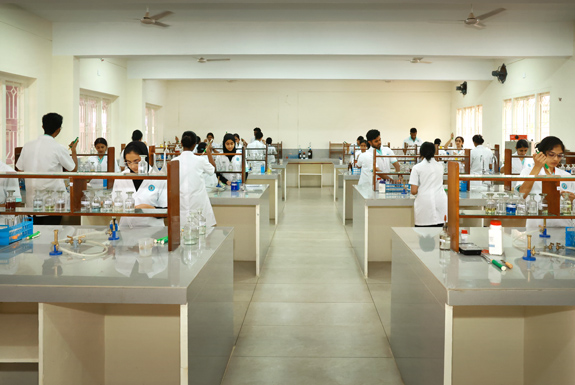
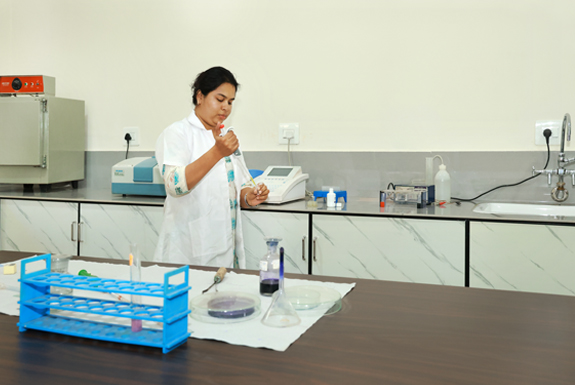
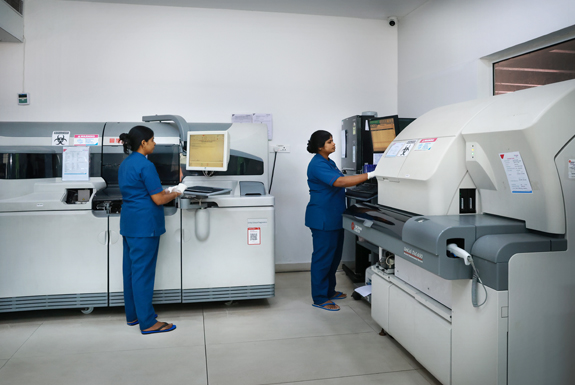
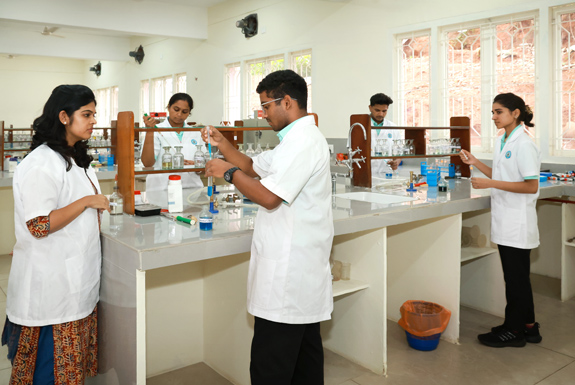
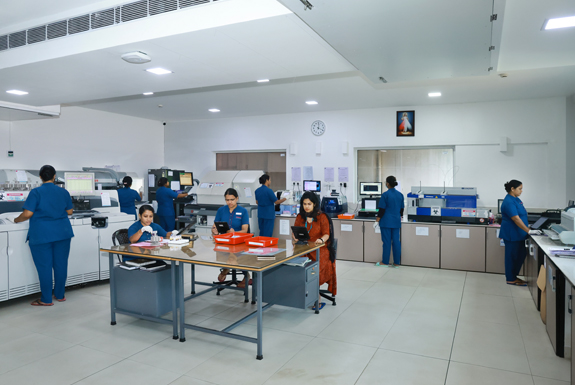

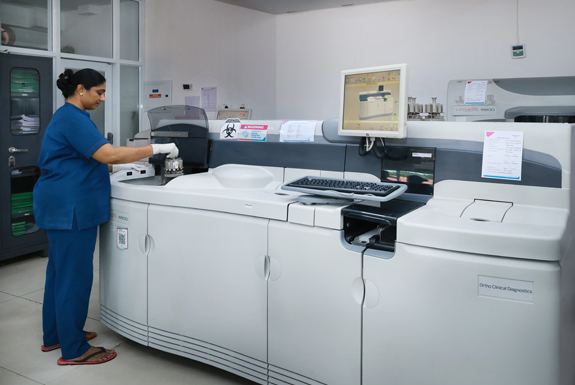
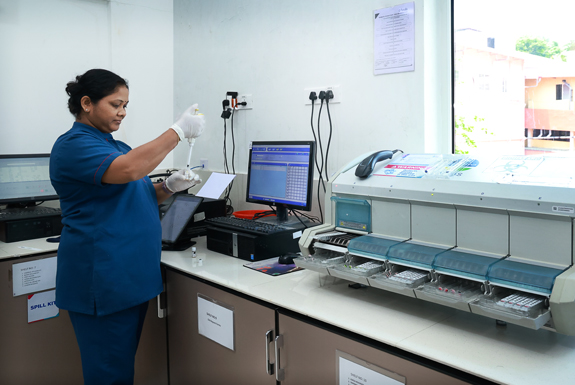
Our Clinical biochemistry laboratory works on a 24x7 basis which processes around 20000 samples and 100000 assays on a monthly basis. The assays include Clinical biochemistry assays, routine and specialized immunoassays, HbA1c and serum protein capillary electrophoresis
The Biochemistry Department at Amala IMS supports medical diagnosis by analysing chemical substances in blood and other body fluids. The department helps doctors assess organ function, find out metabolic problems, and monitor ongoing treatment.
Information relevant to diabetes, kidney disorders, liver disease, electrolyte imbalances, and several metabolic conditions, can be diagnosed through Biochemistry investigations. Symptoms, examination findings and supporting investigation help derive results.
Biochemistry tests are important because they can measure chemical substances, proteins, enzymes, and electrolytes to evaluate overall body function. Doctors can also understand the severity of the disease and whether the treatment is working.
Not all tests require fasting, but some investigations require it. The patient should follow the instructions provided by the doctor or laboratory.
Blood glucose and HbA1c testing can help assess current and longer-term glucose control. Doctors may also request kidney function and lipid tests to evaluate health risks associated with diabetes.
Yes, biochemistry testing is one of the primary ways doctors at Biochemistry Department at Amala IMS detect kidney or liver problems. Tests such as creatinine, urea, bilirubin, and liver enzyme measurements can provide useful information about kidney and liver function.
No, patients should never interpret their biochemistry reports themselves. While you can just look and see whether the result falls outside the standard reference range. You should visit a doctor for accurate interpretation.